In Newsweek September 17, 2012, John Hopkins surgeon, Marty Makary addressed a number of problems within our healthcare system that employees do not talk about. Read the rest of this entry »
Category Archives: Health
Simple tips … Where have all your friends gone Part 3 of 3
Everyone should have a Living Healthcare Will highlighting who is significant and who is not. Does your friend know where you keep it? Make sure Read the rest of this entry »
Simple tips staying safe when the lights go out
Simple tips staying safe when the lights go out. Have you ever had problems with your balance? Has the power gone off and you need to hold onto flashlight and other things for safety? How can you manipulate Read the rest of this entry »
Simple tips to avoid cell phone distractions

iPhone Generation (Photo credit: xcode)
Do you find yourself getting distracted with your cell phone? Are you noticing that you are not accomplishing all the things you would like in your day? As technology has become such a part of everyone’s lives we all have been affected by: a cell phone ringing; others holding conversations in public places; people not paying attention while reading blogs or researching sites; watching You Tube videos; and playing games on these devices. Read the rest of this entry »
Simple and basic tips to bathing, showering and washing up
What is important to personal hygiene? It sounds like such an easy question, but when you are dealing with traumatic brain injury and several other issues that deal with thinking problems this is a complex task. Many times this is difficult to figure out, especially in the first year or more following traumatic brain injury. It is something so many people take for granted everyday, until you no longer have that ability to perform the most basic of all functions. Read the rest of this entry »
Loneliness is the Most Terrible Poverty
Loneliness is the Most Terrible Poverty.
This is a well written article that nearly all TBI, brain dysfunctions, chronic illnesses, and an array of health issues deal with. Most readers will certainly understand this this loneliness. This will also offer insight into FM (fibromyalgia), another frequently misdiagnosed, and misunderstood disease. Take the time to read this and leave your comments.
Laughter as brain injury medicine – Self check-out lanes anyone? Unpredictable days?

This is something many individuals go through with chronic medical issues. You ask the question should I leave the house or should I stay home. One is always believing it will be a good day, so you go about the plans for your day. It turns out this is more of a typical day in the life of all the above mentioned individuals. Please laugh along. You may be able to identify these situations with either yourself or a loved one. I welcome any of your personal “laughter moments”! Read the rest of this entry »
Can your health history be a hinderance to a timely diagnosis and treatment plan?

To tell or not to tell?
Does your health history help or hinder proper diagnosis and treatment following brain injury, stroke, brain dysfunctions, injuries or any type of illness? I refer to illness as both physical and mental. Either way, these are health conditions that should be treated without prejudice, but they are not. It is assumed that giving an accurate health history helps, and it should. Read the rest of this entry »
Simple tips to help prepare yourself for returning to work or determine if you should be employed soon Part 2 of 2
If you’ve been off work for some time and believe you are ready to return how do you handle this? This will take time to figure out: are you ready; how to manage; making a blueprint of the new you; interviewing; and ultimately successful reaching your goals! Read the rest of this entry »
Simple tips to help prepare yourself for returning to work or determine if you should be employed soon Part 1 of 2
Everyone would like to return to a higher level of functioning and feel as though they are contributing to society. Some people more then others, but I doubt most people want to just sit and waste away! Here are some things to consider before returning to work after TBI, chronic illness, mental illness or any other circumstances you’ve endured and are considering a return-to-work status. Read the rest of this entry »
Laughter as brain injury medicine – Dandelions? Black light? Multi-grain?
Sharing humor and laughter experiences from those who deal with thinking, memory, and communication problems. I’ve had some unique stories shared with me after starting the laughter portion on this blog and will share a few of them today. I also will encourage others to send any of their situations and funny stories so we can post them on Wednesdays. Let’s laugh together, it’s so healing and improves ones health. Read the rest of this entry »
Please stop trying to hurry me along

frustration. (Photo credit: nicole.pierce.photography ♥)
No one understands the frustration that hustle and bustle creates in the minds of brain injury, brain dysfunction, chronic illnesses as well as the aging population. In this fast paced society it makes it more difficult for these individuals to do their daily routine without feeling frazzled. Read the rest of this entry »
Laughter as brain injury medicine – Where is he?
So many different things happen with brain injuries and brain dysfunction and as sad as so many things are, it’s really important to laugh daily. Laughter is the best medicine. Research proves that laugher helps heal. With brain issues at the moment the incident occurs there really isn’t anything to laugh about because the person is so frustrated with the ignorant things that happen … it takes awhile to step back at that particular situation and laugh. Read the rest of this entry »
Trusting my neuropsychologist after traumatic brain injury 1992-2000

Akron, Ohio (Photo credit: Wikipedia)
Patients depend on trustworthy healthcare professionals. The majority are trustworthy and understand their limitations and boundaries and others do not. Who else better to trust than an understanding neuropsychologist? This was someone who represented herself as a professional in Akron, Ohio. Read the rest of this entry »
Training the brain could help reduce pain
So many people have chronic pain and it seems like there’s no solution, or very little help. Some things work, some times it works, but in between that time you are still plagued with pain. All people want is for their body to be comfortable…at least some of the time!
I’ve discovered this scientific news May 17, 2012 about the most recent findings of why there is chronic pain and what is happening in the brain. This article really spells that out and also offers much hope.
If you suffer from any sort of pain, take the time to read this brief article from Science News. It offers better understanding into pain.
Training the brain could help reduce pain.
Simple tips if you are getting ready for that special occasion

Attending all the family gatherings and events this time of year can be extremely difficult for those with injuries, chronic illnesses, and brain injuries or dysfunction. Here are a few tips that are helpful to get through these events and yet enjoy the people who are present. It exhausts those dealing with the above-mentioned issues, so planning and organization is the key. Read the rest of this entry »
This is a big reason we can’t get health care
I found one of the real reasons why I couldn’t get medical care. Healthcare professionals are not doing their jobs as I have repeatedly written about. Please take a look at the following news clip. I was contacted by someone close to my situation and was advised of news release today. Read the rest of this entry »
Laughter as brain injury medicine – Permanent Hairdo?
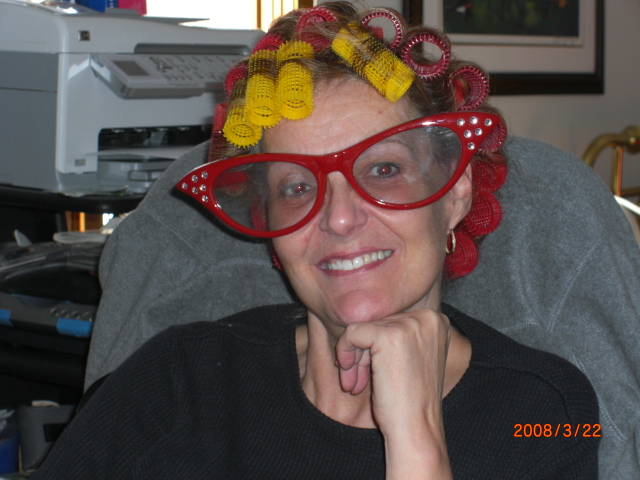
A Day in My Life. Keep Smiling!
Brain injury survivors need to laugh at the things that happen. Even some of the most difficult times can be funny…at least when you reflect on what happened. Communication difficulty of various degrees occur with brain injury. This situation is an unfortunate communication barrier. I give details surrounding the situation so others can better understand what happens in the lives of brain injured survivors. Read the rest of this entry »
Laugher as brain injury medicine – Surprise party?
Laugh with us. Brain injury survivors struggle with difficult times day in and day out. Some of the crazy things that happens appear quite comical in retrospect. The series of Laugher will help others understand that life is very different on a daily basis. Read the rest of this entry »
When your doctor won’t listen

O. M. Lanstrum, Physician, Helena, Montana. (1911) (Photo credit: Butte-Silver Bow Public Library)
Many patients go to the doctor with complaints only to feel they have never been heard. You know when there is something wrong. You know all the struggles in your life. You are your best advocate, unless you are fortunate to have someone help you out. The question is what do you do “When your doctor won’t listen?” Read the rest of this entry »
Laughter as brain injury medicine – Telephone?
It’s something new for everyone on this website. LAUGHTER! Everyone with brain injury or brain dysfunction of any sort have some silly things they do periodically, but some of us more frequently than others…like several times a day!

Laughter… (Photo credit: leodelrosa…)
At the time we do these goofy things we are frustrated with ourselves we either cry or think of ourselves as “plain stupid.” It really doesn’t seem funny at the time, because we just simply can’t figure out what is wrong and don’t notice. In retrospect, when we realize what we did we can laugh! It’s truly difficult to understand this, until you’ve been there. Read the rest of this entry »
General and simple tips for handling and taking medications Part 4 of 4
It is your life and medications can help you with specific problems, but you need to be cautious and know what is working for you and what is not. It is up to you to report exactly how you are feeling.
Keep a medication journal, especially when Read the rest of this entry »
Who Are We
On June 30, 2012 we are asking all those to sign-up to register as a picnic day to bring Awareness of Brain Injury to family and friends. There is an estimated 1 billions people in the world with brain injuries of varying degrees, neurological disorders and brain dysfunction and yet education and understanding is lacking. This is considered the first global picnic.
Click on the link below for the details. Don’t miss out on this opportunity.
General and simple tips for handling and taking medications Part 3 of 4
Physician appointments, Emergency Room Visits, and Hospitalizations–Take all your medications, vitamins, herbs, natural remedies, and anything over the counter.  Take a list of your medications as well. Sometimes there are mistakes with medications and this help alleviate those errors. Read the rest of this entry »
To my last patient…and the last of my patience! Part 2 of 4
This is part 2 of 4 on the letter I wrote to my last patient after the assault as a Registered Nurse on a Neurology-Head Injury Rehabilitation Unit in Northeast Ohio October 30, 1991. In part 1 of 4 I included the table of contents for this letter. This letter was retyped March, 2008 but otherwise has never had revisions. It gives good insight into what was happening inside the healthcare system, and how I perceived the individual who assaulted myself and other healthcare professionals. Read the rest of this entry »
General and simple tips for handling and taking medications Part 2 of 4
 Allergies-Make a list of all your allergies. The list of allergies should include both medication allergies and food allergies. DO NOT take any medications you are allergic to. Usually the most serious allergic reaction occurs when you take the medication for the second time. This can be life threatening. Read the rest of this entry »
To my last patient…and the last of my patience! Part 1 of 4
This letter was written in 1993, a little over a year after my injury. This letter details not only what was happening to me shortly after brain injury, but what was happening inside the healthcare system. The information is accurate and correct as supported by documentation. It has been retyped, but no other revisions exist. Read the rest of this entry »
Healthcare professionals with a traumatic brain injury. Who should know better? Part 3 of 3
Awareness of Brain Injury Daily. I’m applauded with the behaviors and treatment toward my nurse friend when she needed educated healthcare professionals to help her. Instead it was quite the opposite. They simply did not understand traumatic brain injury and they believed she was manipulating her symptoms so she could work the hours of her choice. If they only knew how she was suffering and what she needed to do to show up to work. These healthcare professionals were totally in disbelief of her symptoms and never understood anything following her injury. They began questioning her behaviors and other issues following this mild traumatic brain injury. She wasn’t even told or diagnosed with a mild traumatic brain injury until about a year following injury. Read the rest of this entry »
 braininjuryselfrehabilitation