RSS

Children learn what they live has been a favorite poem of mine. I pray parents and grandparents keep these words and thoughts to help foster a healthy child growing into adult years. This is an excellent post regarding the same. This is the way to nurture a healthy child. Happy reading!

mutheu's avatarSweet Fresh Love!

i’ve been doing some reading on parenting. yesterday in one of the books, i read this now famous statement: children learn what they live. growing up, i remember there was a wall hanging in our home that had this saying. (i think there’s a whole poem that elaborates this…) despite the fact that i’ve seen it since i was a child, it is only now, as a parent of a stunning, amazing 2 year old girl, that i understand this statement so completely. it got me thinking: what is my daughter learning from how i live my life?

i wondered: is she learning that caring for your neighbour, near and far, is important? am i modelling what it is to care about others? is she learning that justice is important and that we must contribute our voice and our actions to ensure it where it is missing? is she learning…

View original post 526 more words


School-Age Children’s Responses to Parents with Disabilities

This rehabilitation nursing journal article School-Age Children’s Responses to Parents with Disabilities was written and completed just one week prior to the assault of traumatic brain injury.  It was not published until 2 years later after having a colleague co-author and help submit the manuscript for publishing. Read the rest of this entry »


Tags: , , , , , , ,

When your doctor won’t listen

O. M. Lanstrum, Physician, Helena, Montana. (1911)

O. M. Lanstrum, Physician, Helena, Montana. (1911) (Photo credit: Butte-Silver Bow Public Library)

Many patients go to the doctor with complaints only to feel they have never been heard.  You know when there is something wrong.  You know all the struggles in your life. You are your best advocate, unless you are fortunate to have someone help you out.  The question is what do you do “When your doctor won’t listen?” Read the rest of this entry »


Tags: , , ,

Laughter as brain injury medicine – Telephone?

It’s something new for everyone on this website.  LAUGHTER! Everyone with brain injury or brain dysfunction of any sort have some silly things they do periodically, but some of us more frequently than others…like several times a day!

Laughter...

Laughter… (Photo credit: leodelrosa…)

  At the time we do these goofy things we are frustrated with ourselves we either cry or think of ourselves as “plain stupid.” It really doesn’t seem funny at the time, because we just simply can’t figure out what is wrong and don’t notice.  In retrospect, when we realize what we did we can laugh!  It’s truly difficult to understand this, until you’ve been there. Read the rest of this entry »


Tags: , , , , ,

This is an excellent writing and how life changes following TBI. It’s identifies areas that are less likely to be understood.

Whyteferret's avatarWhyteferret's Blog

Anniversary: 1. The yearly occurrence of a past event.  2. A celebration or commemoration of a past event.  (Dictionary.com)    There’s no celebration here.

April 25, 2011.  My life changed forever in less than a second.  I was in a roll over motor vehicle accident and sustained a Traumatic Brain Injury.  I survived.  But I will most likely never be the same.   This past year in recovery was a mixture of hope vacillating with fear and anger.  Getting an actual diagnoses of TBI was the first hurdle.  The ER treated and streeted.  I presented “too alert” and with an “unknown history of LOC”  to be sseriously injured.  Really?  If someone responds, “I don’t remember” when asked if they were unconscious, guess what?  Something is not right there.  Most likely they were unconscious.  Not surprisingly, as the swelling in my brain grew, my symptoms progressed.  The medical field finally got it right when I had unequal pupils…

View original post 821 more words


To my last patient…and the last of my patience! Part 4 of 4

This is the final pages of my letter to my last patient part 4 of 4.  This letter in its entirety has clearly identified numerous safety issues without our healthcare system and specifically rehabilitation for neurology and traumatic brain injury patients.  Safety is ultimately the concern for all patients and staff.  Do healthcare professional overlook obvious symptoms because it is just a “job”?  Are patients truly safe?

Neither myself or immediate family ever sought legal action against this facility.  I was trying to get well and had no energy to do anything else.  In retrospect, if we only knew the long-term consequences and had the proper legal advice with authorities looking out for the innocent the outcome would have been totally different.  Maybe, it’s what nurses are expected to put up with and the facility is always right.
Read the rest of this entry »


Tags: , , , , ,

General and simple tips for handling and taking medications Part 4 of 4

It is your life and medications can help you with specific problems, but you need to be cautious and know what is working for you and what is not.  It is up to you to report exactly how you are feeling.

Keep a medication journal, especially when Read the rest of this entry »


Tags: , , , , , , ,

Who Are We

On June 30, 2012 we are asking all those to sign-up to register as a picnic day to bring Awareness of Brain Injury to family and friends. There is an estimated 1 billions people in the world with brain injuries of varying degrees, neurological disorders and brain dysfunction and yet education and understanding is lacking. This is considered the first global picnic.

Click on the link below for the details.  Don’t miss out on this opportunity.

Who Are We.


Tags: , ,

To my last patient…and the last of my patience! Part 3 of 4

To my last patient part 3 of 4 poses a number of problems that cause further psychological harm to inpatient on this rehabilitation unit.  The fear they demonstrated throughout this lengthy stay was insurmountable.  It’s sad that these patients were more concerned about my well-being following the assault they witnessed than staff themselves.  Safety is always a priority.  How safe can anyone feel while being hospitalized? Read the rest of this entry »


Tags: , , , , , ,

The (evil) cancer industry exposed by medical doctors

This is amazing information about cancer and what’s really happening.


General and simple tips for handling and taking medications Part 3 of 4

Physician appointments, Emergency Room Visits, and HospitalizationsTake all your medications, vitamins, herbs, natural remedies, and anything over the counter.  Take a list of your medications as well.  Sometimes there are mistakes with medications and this help alleviate those errors. Read the rest of this entry »


Tags: , , , , , , , ,

Debunking Ten Myths of (TBI) “Recovery”?

Click on the red link above to the “10 myths of Head-Injury”.  The Ten Myths of “Recovery” after head injury is thought provoking. Take the time to review all 10 myths of head-injury. These same myths can be applied to anyone dealing with chronic illness or any illness. It identifies what happens inside our healthcare system and how it actually affects the family.

brokenbrilliant's avatarBroken Brain - Brilliant Mind

The 10 myths of Head-Injury

DEBUNKING TEN MYTHS OF “RECOVERY”
~from CH2 “The Nature of Head Injury” by Thomas Kay, Ph.D. and Muriel Lezak, Ph.D., the book is entitled “Traumatic Brain Injury and Vocational Rehabilitation”, Published by The Research and Training Center, University of Wisconsin-Stout.

Myth #1: The Concept of “Recovery”
Throughout this chapter we avoid such phrases as “recovery after head injury,” There is a reason for this. Most people’s experience, and therefore expectations, regarding illness and injury is one of temporary reduction in functioning, followed by a gradual return to normalcy. People get sick, go to hospital, and get better. Bones are broken, casts applied for a period, muscle strength regained over several months, and scars fade.

When commonplace notion of recovery is applied to head injury, however, considerable harm can be done. Almost never does a patient “recover;” the residual deficits are usually significant and permanent. The…

View original post 3,173 more words


To my last patient…and the last of my patience! Part 2 of 4

This is part 2 of 4 on the letter I wrote to my last patient after the assault as a Registered Nurse on a Neurology-Head Injury Rehabilitation Unit in Northeast Ohio October 30, 1991.  In part 1 of 4 I included the table of contents for this letter.  This letter was retyped March, 2008 but otherwise has never had revisions.  It gives good insight into what was happening inside the healthcare system, and how I perceived the individual who assaulted myself and other healthcare professionals. Read the rest of this entry »


Tags: , , , ,

General and simple tips for handling and taking medications Part 2 of 4

Allergies-Make a list of all your allergies.  The list of allergies should include both medication allergies and food allergies. DO NOT take any medications you are allergic to.  Usually the most serious allergic reaction occurs when you take the medication for the second time.  This can be life threatening. Read the rest of this entry »


Tags: , , , , , , , , ,

To my last patient…and the last of my patience! Part 1 of 4

This letter was written in 1993, a little over a year after my injury.  This letter details not only what was happening to me shortly after brain injury, but what was happening inside the healthcare system.  The information is accurate and correct as supported by documentation.  It has been retyped, but no other revisions exist. Read the rest of this entry »


Tags: , , , , ,

Were you lead to believe you have a Mild Traumatic Brain Injury mTBI? Maybe or maybe not?

Too often we hear about the term Mild Traumatic Brain Injury and wonder why it is called “mild” because those struggling with it find it’s not “mild” at all. However, those individuals that are plagued by ongoing symptoms and regardless how hard they try seem unable to overcome them.  Is this because they really don’t have mTBI and have the other diagnosis that is linked with mTBI and ongoing symptoms that is not publicized?  Would it help if you knew it had a different name and work in a different manner to overcome all the issues at hand? Read the rest of this entry »


Tags: , , , , , ,

General and simple tips for handling and taking medications Part 1 of 4

Millions of medications are prescribed daily.  Here are simple tips for medications and other key ideas to keeping you healthy. Did you ever go for a medical appointment and you hardly understood what the healthcare professional was telling you?  What?

Here I will try to close the gap on the basic things everyone should know about medications.  Read the rest of this entry »


Surprising Concussion Myths and Facts from Science Daily 03.29.2012

Small overview of basic information regarding concussions from Science Daily:

Surprising Concussion Myths and Facts

ScienceDaily (Mar. 29, 2012) — Suppose your son or daughter has just been brought home from an athletic field with a concussion, complains of being tired and wants to go to sleep. Should you let that happen? Read the rest of this entry »


Healthcare professionals with a traumatic brain injury. Who should know better? Part 3 of 3

Awareness of Brain Injury Daily. I’m applauded with the behaviors and treatment toward my nurse friend when she needed educated healthcare professionals to help her.  Instead it was quite the opposite.  They simply did not understand traumatic brain injury and they believed she was manipulating her symptoms so she could work the hours of her choice.  If they only knew how she was suffering and what she needed to do to show up to work.  These healthcare professionals were totally in disbelief of her symptoms and never understood anything following her injury.  They began questioning her behaviors and other issues following this mild traumatic brain injury. She wasn’t even told or diagnosed with a mild traumatic brain injury until about a year following injury. Read the rest of this entry »


Tags: , , ,

Understanding : Brain Aneurysm Statistics and Facts IT IS MY DUTY TO SPREAD AWARENESS

This is an excellent, informative and educational writing that all should read.  It especially highlights subarachnoid hemorrhage.  Please take the time to read the following link:

Understanding : Brain Aneurysm Statistics and Facts IT IS MY DUTY TO SPREAD AWARENESS.


Tags: , , , , ,

Need help? Simple tips: Where do I go? When? How can I ask for help?

So many might think asking for help comes naturally.  Millions of individuals never need to ask for help, hence they do not know how. Of all these people life goes on without great difficulty because they easily deal well with daily living…until that event occurs that changes their lives forever.  Until that time you probably were independent with everything in your life organized and successful.  Most likely, you put others first and everyone seemed to look to you for answers. Unfortunately asking for help following a brain injury sometimes seems impossible simply because all the other consequences of this devastating injury.  It’s a travesty that with all the recent media attention so many are struggling with life altering changes that fluctuate from day-to-day and year-to-year without rehabilitation or help.  Others simply do not understand.

The first key to getting help is to find someone who listens! After getting someone to listen I have included several different ideas to ask for help and receive it for traumatic brain injury, spinal cord injury and other chronic illnesses as well as any life problems to reach your highest level of functioning. Read the rest of this entry »


Tags: , , , , ,

FDA Considering Making Many Drugs OTC

I’m reblogging this so you can be educated about what is happening with the FDA and our over the counter medications.  Please read if you are taking any medications.  This is simply for educational purposes, help to clarify what is happening and how to take care of yourself.  Thanks for reading.

FDA Considering Making Many Drugs OTC.


Healthcare professionals with a traumatic brain injury. Who should know better? 2 of 3

Brain Injury Awareness: Anywhere, Anytime, Anyone.  Healthcare professionals are not exempt from this devastating traumatic brain injury. Without more education, understanding and research how do you think this could compromise your health? How many healthcare professionals are dealing with current brain injuries? We should start doing pilot or research studies on this, or at the very least surveys.

I functioned without difficulty until this last injury.  It’s imperative we educate healthcare workers before this happens to them.  It’s always an after thought.  The I should’ve, would’ve, could’ve scenario!  Stop it from happening to begin with. Prevention is key and they should all know that! When does someone step in to help?  When should they return to work?  Two weeks after brain surgery?  Two months after injury?  Where are the guidelines? What and who are protecting patients? Who is helping the healthcare professionals through this difficult time?  They are always helping other people at work…but what happens when it is a healthcare professional?  That’s the key…when it happens to a healthcare professional then everyone is expected to understand and help.  That is not the case. Few understand and fewer care.  This is all about brain injury awareness and patient safety and advocacy.  You don’t want to be a patient! Read the rest of this entry »


Tags: , , , ,

Protect our nurses from violence: Kennedy-Nurse violence

The law applies to some and others get away with bad behavior or criminal behaviors. Either way, the nurses can easily be injured.  Quit beating up our nurses!  Most child/infant abductions are by family members.  These nurses were doing their job!

‘I can’t believe I was assaulted by a Kennedy’, says nurse ‘kicked in the crotch by RFK’s son when she tried to stop him taking his baby outside’
Read more: http://www.dailymail.co.uk/news/article-2106613/Douglas-Kennedy-arrest-Nurse-says-I-believe-I-assaulted-Kennedy.html#ixzz1pwAGooiO


Unless you get it, you just dont get it…

Unless you get it, you just dont get it….

I read this, and I think everyone with a Traumatic Brain Injury, Spinal Cord Injury and Chronic Illness (mental or physical) can understand these ignorant comments.

Take a look and think about how many times you’ve heard so many of these comments.  Gee, how easy life was when I could jump out of bed, get dressed, take care of family, go to work, go to school, do community work, etc…and if only we could do that again!  Instead not only do you deal with the daily problems you need to deal with ignorant and uneducated individuals.

This was an excellent posting.  Hope you can identify with this.  You are not faking it, you are not crazy, this is not drama… this is your LIFE and it is REALITY!


How do you really feel dealing with traumatic brain injury? Video by me!

If you are dealing with brain injury you spend many days just standing at the crossroads in life, and wondering which way to go!  It’s not easy when families walk away, friends  leave, and your pet(s) stays!  Traumatic brain injury affects the entire family system including the animals. Pet therapy and their unconditional love help patients and families cope throughout this difficult journey. It’s priceless.  Animals are consistently the most therapeutic in this lengthy rehabilitation process for these special families.  This unimaginable journey is affected in every aspect of life: physiologically, emotionally, socially, and spiritually. Families walk away, friends leave, and animals stay.

 Poor judgment is only one issue of this complex injury.  In this video one can see that even the dog’s health was jeopardized.  Read the rest of this entry »


Tags: , , , , , , , ,

Mediterranean diet reduces damage to small blood vessels in the brain

Click on both the LosAngles Times and Health Day for two good reads on nutrition and brain health with the Mediterranean diet  Dr. Walt’s blog.

Mediterranean diet reduces damage to small blood vessels in the brain


Healthcare professionals with a traumatic brain injury. Who should know better? Part 1 of 3

How confident do you think you would be if a healthcare professional was caring for you and had a recent traumatic brain injury? It’s doubtful you would know unless this were a new injury or obvious problem. Isn’t that what brain injuries are: Invisible Injuries? So who’s policing healthcare professionals when they do not understand traumatic brain injuries? Denial, denial, denial.  Errors are not widely publicized and rarely are documented. They are supposed to be documented. When errors are documented they are usually not in your medical records unless it’s a subtle mention so they do not raise red flags. There is a separate incident report created that is not attached to your medical file.

Healthcare is also guilty of pushing their employees back to work. Why don’t  healthcare professionals understand TBI or mental/brain dysfunction? They are the least likely people to be compassionate and understanding when an employee is ill (mentally or physically) or injured.  Unfortunately, their misgivings may become part of your life threatening injury or illness and affect your health and life forever.  I will share only one situation at this time so not to overwhelm anyone with what’s happening inside our healthcare facilities. Read the rest of this entry »


Tags: , , , , ,


Tips to help take care of your health and healthcare needs – addendum

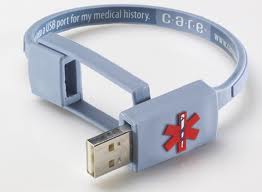
Re:  Medical History Bracelet
I needed to provide information I left out in my post dated 3.16.2012 Tips to help take care of your heath and healthcare needs.  There does not appear to be an area to scan in documents onto the flash drive, but that is beyond my expertise. If someone finds that answer, please let us know.
The Medical History Bracelet includes all of the following: Read the rest of this entry »