What is important to personal hygiene? It sounds like such an easy question, but when you are dealing with traumatic brain injury and several other issues that deal with thinking problems this is a complex task. Many times this is difficult to figure out, especially in the first year or more following traumatic brain injury. It is something so many people take for granted everyday, until you no longer have that ability to perform the most basic of all functions. Read the rest of this entry »
Loneliness is the Most Terrible Poverty
Loneliness is the Most Terrible Poverty.
This is a well written article that nearly all TBI, brain dysfunctions, chronic illnesses, and an array of health issues deal with. Most readers will certainly understand this this loneliness. This will also offer insight into FM (fibromyalgia), another frequently misdiagnosed, and misunderstood disease. Take the time to read this and leave your comments.
Laughter as brain injury medicine –Ice cream anyone?

Baskin Robbins 31 (Photo credit: starmanseries)
With the warm weather upon us and those out enjoying ice cream cones it reminds me of a family outing that turned to laughter! Oh, those simple things we say, and mean something else!
I think the most adorable Read the rest of this entry »
Using the Immune System to Fight Alzheimer’s Disease
Using the Immune System to Fight Alzheimer’s Disease.
This is some amazing research. If the immune system can fight Alzheimer’s Disease I wonder if it will help traumatic brain injuries. It would seem as though it could.
Click on the link “Using the Immune System to Fight Alzheimer’s Disease”. This is an easy to understand post. Read this and see what you think.
What’s the monetary value of this injury?
Nearly everyone believes that if they are injured at work their employer will help them. Most people believe this because they are excellent employees and should be backed by their employers. I just had a hearing to process my recent claims of significant physical injuries for the medical findings. Read the rest of this entry »
Simple tips to help get proper legal representation following TBI, injuries and other issues
Legal Representation following traumatic brain injury, injuries, and other cognitive issues can help ease the burden in many aspects of life. Don’t wait, time is of essence. Seek help now before it’s too late. The sooner the better to ask for assistance. Legal help can equal proper evaluation, assessment, diagnosis, treatment plan and other proper healthcare interventions. Read the rest of this entry »
Laughter as brain injury medicine – Self check-out lanes anyone? Unpredictable days?

This is something many individuals go through with chronic medical issues. You ask the question should I leave the house or should I stay home. One is always believing it will be a good day, so you go about the plans for your day. It turns out this is more of a typical day in the life of all the above mentioned individuals. Please laugh along. You may be able to identify these situations with either yourself or a loved one. I welcome any of your personal “laughter moments”! Read the rest of this entry »
Can your health history be a hinderance to a timely diagnosis and treatment plan?

To tell or not to tell?
Does your health history help or hinder proper diagnosis and treatment following brain injury, stroke, brain dysfunctions, injuries or any type of illness? I refer to illness as both physical and mental. Either way, these are health conditions that should be treated without prejudice, but they are not. It is assumed that giving an accurate health history helps, and it should. Read the rest of this entry »
Simple tips to help prepare yourself for returning to work or determine if you should be employed soon Part 2 of 2
If you’ve been off work for some time and believe you are ready to return how do you handle this? This will take time to figure out: are you ready; how to manage; making a blueprint of the new you; interviewing; and ultimately successful reaching your goals! Read the rest of this entry »
This article emphasizing ADD, TBI, and any number of brain dysfunction that occur. Please take some time to review this if you deal with any chronic injuries or diseases as well. This is written by an expert in the area and holds an array of information. Please mark this site and refer others to help educate the world. Thank you in advance to all my readers. Please leave comments.

Link dense – links are dark grey to reduce distractibiliy –
they turn red on mouseover – hover before clicking for a bit more info first
ACO Conference Binder 2012 –
Blog expanded Speaker Content
Madelyn Griffith-Haynie – Part 3aIntractable Ignorance:
forming an opinion without knowing very much about a subject
while refusing to investigate any information
that might change one’s mind;
closed mindedness;
cognitive inflexibility.Feed Your Head
I will always stare in mouth-open amazement whenever I hear statements that might as well be saying, “I don’t believe that ADD is a legitimate disorder” from intelligent and otherwise well-informed individuals.
- Part of the the lack of acceptance and understanding is certainly the fact that ADD/EFD is what we call an invisible disorder — unlike many physical disabilities, for example.
- Behaviors are visible, of course, but far too many people labor under the illusion that all “[mis]behavior” is ALWAYS within the…


View original post 2,423 more words
Laughter as brain injury medicine – Are you hot and looking for a fan?
Laughter helps promote healing in so many ways. Life’s challenges with brain injury, dysfunction, chronic illnesses and other injuries are all life altering events. Sometimes it’s very difficult to find humor in the midst of these changes but it’s important to have laughter to remain healthy. Sometimes what one perceives as being humorous is not necessarily funny to another. Enjoy the hot and cold of this week’s laughter time! Read the rest of this entry »
What is causing an increase in dizziness over the past year…a new revelation!

dizziness (Photo credit: iamnelaas)
I’m still figuring out symptoms and trying to problem solve nearly 21 years later. So what is the cause of dizziness anyway? I’m sharing this level of frustration so others can see how difficult it is with any individual dealing with traumatic brain injury. Read the rest of this entry »
Simple tips to help prepare yourself for returning to work or determine if you should be employed soon Part 1 of 2
Everyone would like to return to a higher level of functioning and feel as though they are contributing to society. Some people more then others, but I doubt most people want to just sit and waste away! Here are some things to consider before returning to work after TBI, chronic illness, mental illness or any other circumstances you’ve endured and are considering a return-to-work status. Read the rest of this entry »
Laughter as brain injury medicine – Dandelions? Black light? Multi-grain?
Sharing humor and laughter experiences from those who deal with thinking, memory, and communication problems. I’ve had some unique stories shared with me after starting the laughter portion on this blog and will share a few of them today. I also will encourage others to send any of their situations and funny stories so we can post them on Wednesdays. Let’s laugh together, it’s so healing and improves ones health. Read the rest of this entry »
A young man who has touched my life in countless ways
 Graduation and party time of year can be a stressful time for many. This year is a significant milestone in the life for a young man who entered into this world after my injury. He does not have any idea of what I was like before he was born. He loves me for who I am and not who I was. He knows nothing different. He gave me hope. Hope for a better tomorrow.
I will highlight ways children can help Read the rest of this entry »
Please stop trying to hurry me along

frustration. (Photo credit: nicole.pierce.photography ♥)
No one understands the frustration that hustle and bustle creates in the minds of brain injury, brain dysfunction, chronic illnesses as well as the aging population. In this fast paced society it makes it more difficult for these individuals to do their daily routine without feeling frazzled. Read the rest of this entry »
Laughter as brain injury medicine – Words with double meanings
Laughter is imperative to recover from brain injury and all other issues that affect your health. If it were not for keeping a sense of humor one does not know how one could survive. There have and continue to be plenty of tears shed in the meantime. They aren’t just your tears, but those closest to one’s situation…that care and love one. They also suffer immensely without education or help.

Jazz Has a Sense of Humor (Photo credit: Wikipedia)
Most have learned to laugh with me, but they cry with me too. They probably cry because I make them absolutely miserable at times! Read the rest of this entry »
These are excellent steps to conquering negative emotions of fear, anger and lonely. Think about how this could work in your life.
I now know professionals were taken advantage of my situation
Professionals know what they can and cannot do. How can they get away with this? Brain injured and many patients do not know this and depend on the trusted and working relationship with the healthcare professional. I cannot believe I would be so foolish to follow explicit instructions, but I did. Yep, to get a home equity loanand pay $4477.40 was only one situation Read the rest of this entry »
Simple tips to help you feel better instantly
When you feel as though everything you are doing isn’t helping there is still something you can do to help make yourself feel better. You’re probably tired about hearing you need good nutrition and exercise. This is true, good nutrition and exercise are essential to your optimal level of health. Nutrition and exercise needs to be a lifestyle change and that takes at least 5 weeks of consistent change. What about an instant change that doesn’t include nutrition or exercise? Read the rest of this entry »
Laughter as brain injury medicine – Where is he?
So many different things happen with brain injuries and brain dysfunction and as sad as so many things are, it’s really important to laugh daily. Laughter is the best medicine. Research proves that laugher helps heal. With brain issues at the moment the incident occurs there really isn’t anything to laugh about because the person is so frustrated with the ignorant things that happen … it takes awhile to step back at that particular situation and laugh. Read the rest of this entry »
Trusting my neuropsychologist after traumatic brain injury 1992-2000

Akron, Ohio (Photo credit: Wikipedia)
Patients depend on trustworthy healthcare professionals. The majority are trustworthy and understand their limitations and boundaries and others do not. Who else better to trust than an understanding neuropsychologist? This was someone who represented herself as a professional in Akron, Ohio. Read the rest of this entry »
Training the brain could help reduce pain
So many people have chronic pain and it seems like there’s no solution, or very little help. Some things work, some times it works, but in between that time you are still plagued with pain. All people want is for their body to be comfortable…at least some of the time!
I’ve discovered this scientific news May 17, 2012 about the most recent findings of why there is chronic pain and what is happening in the brain. This article really spells that out and also offers much hope.
If you suffer from any sort of pain, take the time to read this brief article from Science News. It offers better understanding into pain.
Training the brain could help reduce pain.
Simple tips if you are getting ready for that special occasion

Attending all the family gatherings and events this time of year can be extremely difficult for those with injuries, chronic illnesses, and brain injuries or dysfunction. Here are a few tips that are helpful to get through these events and yet enjoy the people who are present. It exhausts those dealing with the above-mentioned issues, so planning and organization is the key. Read the rest of this entry »
This is a big reason we can’t get health care
I found one of the real reasons why I couldn’t get medical care. Healthcare professionals are not doing their jobs as I have repeatedly written about. Please take a look at the following news clip. I was contacted by someone close to my situation and was advised of news release today. Read the rest of this entry »
Laughter as brain injury medicine – Permanent Hairdo?
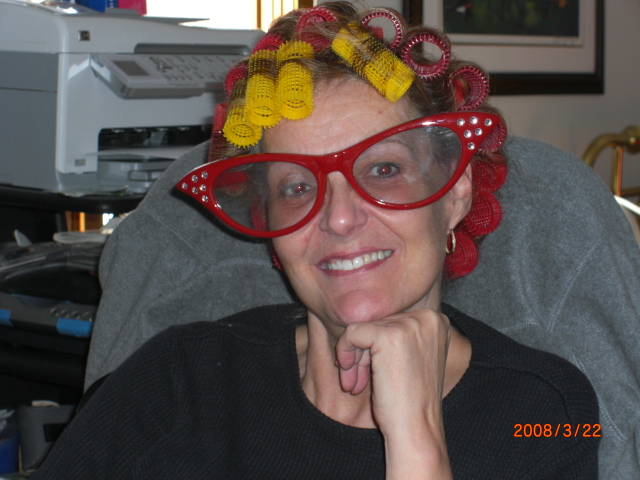
A Day in My Life. Keep Smiling!
Brain injury survivors need to laugh at the things that happen. Even some of the most difficult times can be funny…at least when you reflect on what happened. Communication difficulty of various degrees occur with brain injury. This situation is an unfortunate communication barrier. I give details surrounding the situation so others can better understand what happens in the lives of brain injured survivors. Read the rest of this entry »
Trust who with your life and healthcare? Why?
Trust is a basic need. When your life and health is jeopardized because those who you trust do not help where can you turn and what happens? I was initially injured October 30, 1991 and a subarachnoid hemorrhage in December 22, 1991. I was not treated or diagnosed with a subarachnoid hemorrhage until 2000 after gathering my medical records and having them reviewed as well as an excellent medical doctor who listened. Read the rest of this entry »
Simple tips to help deal with memory problems

Digital Camera Magazine (August 2011) (Photo credit: midlander1231)
Are you having difficulty with your memory and want to know how you can help yourself. Here are some tips to help compensate for memory problems. There are a list of ways to cope with these deficits. The first way you can begin to help yourself is by keeping a journal and documenting. Immediately following an injury or dealing with brain dysfunction you may need a friend, spouse, or significant other to help document in a journal. Have you tried using a camera to record everything in your life? One will give suggestions of how this works. Read the rest of this entry »
This is excellent and everyone needs to read this.

One of the doctors that has been at the forefront of the battle against traumatic brain injury (TBI) and chronic traumatic encephalopathy (CTE) is Dr. Daniel Amen. He has been working with athletes, military servicemen, and other brain trauma patients to provide a treatment regimen to help them to better cope with living with the effects of CTE and TBI — memory loss, dementia and depression. As Dr. Amen said recently, “My hope is that through increased awareness and education we can help these athletes before it’s too late.”
Since people with the CTE and TBI condition often do not have visible scars, it is hard for most people, including some physicians and other medical providers, to understand the extent to which short-term memory loss affects one’s ability to cope with daily living. Things that other people take for granted just takes much longer…
View original post 2,569 more words
Laugher as brain injury medicine – Surprise party?
Laugh with us. Brain injury survivors struggle with difficult times day in and day out. Some of the crazy things that happens appear quite comical in retrospect. The series of Laugher will help others understand that life is very different on a daily basis. Read the rest of this entry »
 braininjuryselfrehabilitation