
Attending all the family gatherings and events this time of year can be extremely difficult for those with injuries, chronic illnesses, and brain injuries or dysfunction. Here are a few tips that are helpful to get through these events and yet enjoy the people who are present. It exhausts those dealing with the above-mentioned issues, so planning and organization is the key. Read the rest of this entry »
Tags: mental-health, overwhelming feelings

A Day in My Life. Keep Smiling!
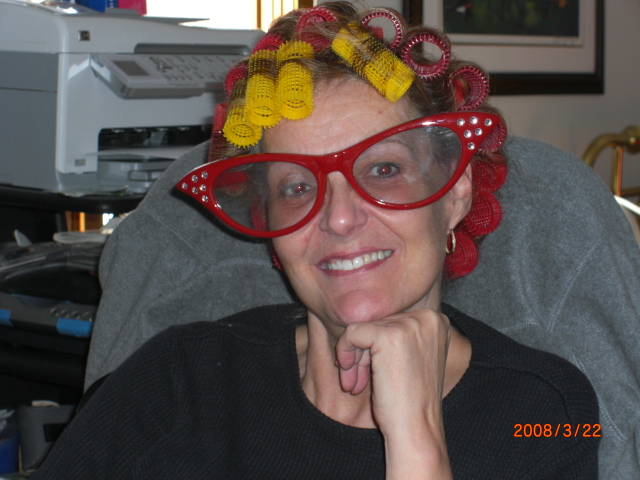
Brain injury survivors need to laugh at the things that happen. Even some of the most difficult times can be funny…at least when you reflect on what happened. Communication difficulty of various degrees occur with brain injury. This situation is an unfortunate communication barrier. I give details surrounding the situation so others can better understand what happens in the lives of brain injured survivors. Read the rest of this entry »
Tags: Conditions and Diseases, Hair, Hairstyle, Health, Humor, Laughter, TBI, Trauma and Injuries

O. M. Lanstrum, Physician, Helena, Montana. (1911) (Photo credit: Butte-Silver Bow Public Library)
Many patients go to the doctor with complaints only to feel they have never been heard. You know when there is something wrong. You know all the struggles in your life. You are your best advocate, unless you are fortunate to have someone help you out. The question is what do you do “When your doctor won’t listen?” Read the rest of this entry »
Tags: Conditions and Diseases, Health, Patient, Physician
It’s something new for everyone on this website. LAUGHTER! Everyone with brain injury or brain dysfunction of any sort have some silly things they do periodically, but some of us more frequently than others…like several times a day!

Laughter… (Photo credit: leodelrosa…)
At the time we do these goofy things we are frustrated with ourselves we either cry or think of ourselves as “plain stupid.” It really doesn’t seem funny at the time, because we just simply can’t figure out what is wrong and don’t notice. In retrospect, when we realize what we did we can laugh! It’s truly difficult to understand this, until you’ve been there. Read the rest of this entry »
Tags: Happiness, Health, Humour, Joy, Laughter, Pleasure
This is the final pages of my letter to my last patient part 4 of 4. This letter in its entirety has clearly identified numerous safety issues without our healthcare system and specifically rehabilitation for neurology and traumatic brain injury patients. Safety is ultimately the concern for all patients and staff. Do healthcare professional overlook obvious symptoms because it is just a “job”? Are patients truly safe?
Neither myself or immediate family ever sought legal action against this facility. I was trying to get well and had no energy to do anything else. In retrospect, if we only knew the long-term consequences and had the proper legal advice with authorities looking out for the innocent the outcome would have been totally different. Maybe, it’s what nurses are expected to put up with and the facility is always right.
Read the rest of this entry »
Tags: Abuse, Education, Healthcare, Prevent Violence on Nurses, TBI, Traumatic Brain Injury
To my last patient part 3 of 4 poses a number of problems that cause further psychological harm to inpatient on this rehabilitation unit. The fear they demonstrated throughout this lengthy stay was insurmountable. It’s sad that these patients were more concerned about my well-being following the assault they witnessed than staff themselves. Safety is always a priority. How safe can anyone feel while being hospitalized? Read the rest of this entry »
Tags: Abuse, Education, Health, Healthcare, Prevent Violence on Nurses, TBI, Traumatic Brain Injury
Physician appointments, Emergency Room Visits, and Hospitalizations–Take all your medications, vitamins, herbs, natural remedies, and anything over the counter.  Take a list of your medications as well. Sometimes there are mistakes with medications and this help alleviate those errors. Read the rest of this entry »
Tags: Chronic illness, Education, Health, Help, Medications, Nurse, Pharmaceutical drug, Rehabilitation, Traumatic Brain Injury
This is part 2 of 4 on the letter I wrote to my last patient after the assault as a Registered Nurse on a Neurology-Head Injury Rehabilitation Unit in Northeast Ohio October 30, 1991. In part 1 of 4 I included the table of contents for this letter. This letter was retyped March, 2008 but otherwise has never had revisions. It gives good insight into what was happening inside the healthcare system, and how I perceived the individual who assaulted myself and other healthcare professionals. Read the rest of this entry »
Tags: Abuse, Education, Nurse Violence, TBI, Traumatic Brain Injury
 Too often we hear about the term Mild Traumatic Brain Injury and wonder why it is called “mild” because those struggling with it find it’s not “mild” at all. However, those individuals that are plagued by ongoing symptoms and regardless how hard they try seem unable to overcome them. Is this because they really don’t have mTBI and have the other diagnosis that is linked with mTBI and ongoing symptoms that is not publicized? Would it help if you knew it had a different name and work in a different manner to overcome all the issues at hand? Read the rest of this entry »
Tags: Brain Injury, Chronic Traumatic Encephalopathy, Concussion, Contact sport, Head Injury, Health, Traumatic Brain Injury
 So many might think asking for help comes naturally. Millions of individuals never need to ask for help, hence they do not know how. Of all these people life goes on without great difficulty because they easily deal well with daily living…until that event occurs that changes their lives forever. Until that time you probably were independent with everything in your life organized and successful. Most likely, you put others first and everyone seemed to look to you for answers. Unfortunately asking for help following a brain injury sometimes seems impossible simply because all the other consequences of this devastating injury. It’s a travesty that with all the recent media attention so many are struggling with life altering changes that fluctuate from day-to-day and year-to-year without rehabilitation or help. Others simply do not understand.
The first key to getting help is to find someone who listens! After getting someone to listen I have included several different ideas to ask for help and receive it for traumatic brain injury, spinal cord injury and other chronic illnesses as well as any life problems to reach your highest level of functioning. Read the rest of this entry »
Tags: Brain Injury, Help, Injury, Neurological disorder, Trauma and Injuries, Traumatic Brain Injury
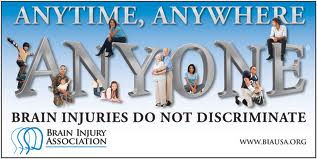
Brain Injury Awareness: Anywhere, Anytime, Anyone.  Healthcare professionals are not exempt from this devastating traumatic brain injury. Without more education, understanding and research how do you think this could compromise your health? How many healthcare professionals are dealing with current brain injuries? We should start doing pilot or research studies on this, or at the very least surveys.
I functioned without difficulty until this last injury. It’s imperative we educate healthcare workers before this happens to them. It’s always an after thought. The I should’ve, would’ve, could’ve scenario! Stop it from happening to begin with. Prevention is key and they should all know that! When does someone step in to help? When should they return to work? Two weeks after brain surgery? Two months after injury? Where are the guidelines? What and who are protecting patients? Who is helping the healthcare professionals through this difficult time? They are always helping other people at work…but what happens when it is a healthcare professional? That’s the key…when it happens to a healthcare professional then everyone is expected to understand and help. That is not the case. Few understand and fewer care. This is all about brain injury awareness and patient safety and advocacy. You don’t want to be a patient! Read the rest of this entry »
Tags: Brain Injury, Head Injury, Health care provider, Neurological disorder, Traumatic Brain Injury
Unless you get it, you just dont get it….
I read this, and I think everyone with a Traumatic Brain Injury, Spinal Cord Injury and Chronic Illness (mental or physical) can understand these ignorant comments.
Take a look and think about how many times you’ve heard so many of these comments. Gee, how easy life was when I could jump out of bed, get dressed, take care of family, go to work, go to school, do community work, etc…and if only we could do that again! Instead not only do you deal with the daily problems you need to deal with ignorant and uneducated individuals.
This was an excellent posting. Hope you can identify with this. You are not faking it, you are not crazy, this is not drama… this is your LIFE and it is REALITY!
 If you are dealing with brain injury you spend many days just standing at the crossroads in life, and wondering which way to go! It’s not easy when families walk away, friends leave, and your pet(s) stays! Traumatic brain injury affects the entire family system including the animals. Pet therapy and their unconditional love help patients and families cope throughout this difficult journey. It’s priceless. Animals are consistently the most therapeutic in this lengthy rehabilitation process for these special families. This unimaginable journey is affected in every aspect of life: physiologically, emotionally, socially, and spiritually. Families walk away, friends leave, and animals stay.
Poor judgment is only one issue of this complex injury. In this video one can see that even the dog’s health was jeopardized. Read the rest of this entry »
Tags: Animals, Brain Injury, Dog, Dogs, Feed Jake, Injury, Rehabilitation, Survivor, TBI
 How confident do you think you would be if a healthcare professional was caring for you and had a recent traumatic brain injury? It’s doubtful you would know unless this were a new injury or obvious problem. Isn’t that what brain injuries are: Invisible Injuries? So who’s policing healthcare professionals when they do not understand traumatic brain injuries? Denial, denial, denial. Errors are not widely publicized and rarely are documented. They are supposed to be documented. When errors are documented they are usually not in your medical records unless it’s a subtle mention so they do not raise red flags. There is a separate incident report created that is not attached to your medical file.
Healthcare is also guilty of pushing their employees back to work. Why don’t healthcare professionals understand TBI or mental/brain dysfunction? They are the least likely people to be compassionate and understanding when an employee is ill (mentally or physically) or injured. Unfortunately, their misgivings may become part of your life threatening injury or illness and affect your health and life forever. I will share only one situation at this time so not to overwhelm anyone with what’s happening inside our healthcare facilities. Read the rest of this entry »
Tags: Brain Injury, Health care provider, Registered nurse, TBI, Trauma center, Traumatic Brain Injury
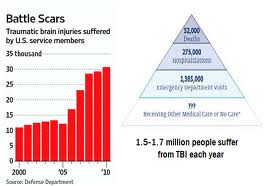
 What is the real reason traumatic brain injury is misdiagnosed, untreated or under treated? Do we have enough rehabilitation centers in America to accommodate 1.7 million people every year? Is this a national problem or local issue? I cannot believe they missed the most obvious of all … brain injury. I was the patient with all the issues…but the healthcare professionals still expect you have it all together to let them know what’s going on. What one does know is most head injuries, strokes, and many diseases of the brain are not classic in any way. The emergency room personnel look for only the classic obvious symptoms: one sided weakness, dropping of the facial muscles, slurred speech, and others. These are not necessarily symptoms that appear with the 1.7 million traumatic brain injuries every year. Read the rest of this entry »
Tags: Concussion, Head Injury, Health care provider, Traumatic Brain Injury
How can you cope with the unmentionable after traumatic brain injury? It’s blood, sweat and tears with urine, sweat and feces. Oh Crap, or Piss-on-it, or just too much Sweat! Any way you look at it I stink!  The injury is healed, but now you have so many symptoms to live and cope with. Now, who is there to help you anyway? You are at home…big deal! It is a big deal to be at home, but now you have to figure out your surroundings, your role in life, but most importantly how your body now functions or for that matter does not function. Read the rest of this entry »
Tags: Brain Injury, Injury, Rehabilitation, Trauma and Injuries, Traumatic Brain Injury
How often do you heard you are not the same person? In many ways you have changed but the struggle you deal with is partly owing to all the characteristics who made you what you are today. You are still the same person, in the literal sense. And so much of you can not change. You just function differently physically, emotionally and in life itself. It’s this struggle within that is so difficult. I tried to put into encouraging words the easiest way to understand why you are NOT a different person and why you struggle with this every day. Read the rest of this entry »
Tags: broken brain, Conditions and Diseases, emotional, encouragement, heart mind and soul, living with brain injury, severe brain injury, strength hope, support, Traumatic Brain Injury
 The amount of paperwork is insurmountable after brain injury. A time when paperwork is the most difficult to complete and work with, you now have more paperwork than ever before! Now, everywhere you turn you need to fill out papers on: Employment leave, Health insurance, Disability insurance, Social Security, Worker’s compensation, Medicare, Medicaid among others. And no one is prepared to manage this paperwork even without a traumatic brain injury. Read the rest of this entry »
How was I going to get through the holidays with this new worsening of symptoms from traumatic brain injury? I could not tolerate noise, lights, conversations, and just the simple things in daily life. By the middle of December my headaches were getting worse, if that were even possible! My vision was darkening. Read the rest of this entry »
Tags: Assaults on Nurse and Healthcare Providers, Conditions and Diseases, Head Injury, Headache, Neurological Disorders, Nursing, Traumatic Brain Injury









 braininjuryselfrehabilitation