On June 30, 2012 we are asking all those to sign-up to register as a picnic day to bring Awareness of Brain Injury to family and friends. There is an estimated 1 billions people in the world with brain injuries of varying degrees, neurological disorders and brain dysfunction and yet education and understanding is lacking. This is considered the first global picnic.
Click on the link below for the details. Don’t miss out on this opportunity.
Who Are We.
Tags: Brain Injury, Education, Traumatic Brain Injury
To my last patient part 3 of 4 poses a number of problems that cause further psychological harm to inpatient on this rehabilitation unit. The fear they demonstrated throughout this lengthy stay was insurmountable. It’s sad that these patients were more concerned about my well-being following the assault they witnessed than staff themselves. Safety is always a priority. How safe can anyone feel while being hospitalized? Read the rest of this entry »
Tags: Abuse, Education, Health, Healthcare, Prevent Violence on Nurses, TBI, Traumatic Brain Injury
Physician appointments, Emergency Room Visits, and Hospitalizations–Take all your medications, vitamins, herbs, natural remedies, and anything over the counter.  Take a list of your medications as well. Sometimes there are mistakes with medications and this help alleviate those errors. Read the rest of this entry »
Tags: Chronic illness, Education, Health, Help, Medications, Nurse, Pharmaceutical drug, Rehabilitation, Traumatic Brain Injury
This is part 2 of 4 on the letter I wrote to my last patient after the assault as a Registered Nurse on a Neurology-Head Injury Rehabilitation Unit in Northeast Ohio October 30, 1991. In part 1 of 4 I included the table of contents for this letter. This letter was retyped March, 2008 but otherwise has never had revisions. It gives good insight into what was happening inside the healthcare system, and how I perceived the individual who assaulted myself and other healthcare professionals. Read the rest of this entry »
Tags: Abuse, Education, Nurse Violence, TBI, Traumatic Brain Injury
 Too often we hear about the term Mild Traumatic Brain Injury and wonder why it is called “mild” because those struggling with it find it’s not “mild” at all. However, those individuals that are plagued by ongoing symptoms and regardless how hard they try seem unable to overcome them. Is this because they really don’t have mTBI and have the other diagnosis that is linked with mTBI and ongoing symptoms that is not publicized? Would it help if you knew it had a different name and work in a different manner to overcome all the issues at hand? Read the rest of this entry »
Tags: Brain Injury, Chronic Traumatic Encephalopathy, Concussion, Contact sport, Head Injury, Health, Traumatic Brain Injury
Awareness of Brain Injury Daily. I’m applauded with the behaviors and treatment toward my nurse friend when she needed educated healthcare professionals to help her. Instead it was quite the opposite. They simply did not understand traumatic brain injury and they believed she was manipulating her symptoms so she could work the hours of her choice. If they only knew how she was suffering and what she needed to do to show up to work. These healthcare professionals were totally in disbelief of her symptoms and never understood anything following her injury. They began questioning her behaviors and other issues following this mild traumatic brain injury. She wasn’t even told or diagnosed with a mild traumatic brain injury until about a year following injury. Read the rest of this entry »
Tags: Education, Nurses, TBI, Traumatic Brain Injury
 So many might think asking for help comes naturally. Millions of individuals never need to ask for help, hence they do not know how. Of all these people life goes on without great difficulty because they easily deal well with daily living…until that event occurs that changes their lives forever. Until that time you probably were independent with everything in your life organized and successful. Most likely, you put others first and everyone seemed to look to you for answers. Unfortunately asking for help following a brain injury sometimes seems impossible simply because all the other consequences of this devastating injury. It’s a travesty that with all the recent media attention so many are struggling with life altering changes that fluctuate from day-to-day and year-to-year without rehabilitation or help. Others simply do not understand.
The first key to getting help is to find someone who listens! After getting someone to listen I have included several different ideas to ask for help and receive it for traumatic brain injury, spinal cord injury and other chronic illnesses as well as any life problems to reach your highest level of functioning. Read the rest of this entry »
Tags: Brain Injury, Help, Injury, Neurological disorder, Trauma and Injuries, Traumatic Brain Injury
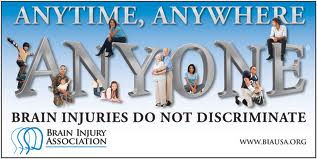
Brain Injury Awareness: Anywhere, Anytime, Anyone.  Healthcare professionals are not exempt from this devastating traumatic brain injury. Without more education, understanding and research how do you think this could compromise your health? How many healthcare professionals are dealing with current brain injuries? We should start doing pilot or research studies on this, or at the very least surveys.
I functioned without difficulty until this last injury. It’s imperative we educate healthcare workers before this happens to them. It’s always an after thought. The I should’ve, would’ve, could’ve scenario! Stop it from happening to begin with. Prevention is key and they should all know that! When does someone step in to help? When should they return to work? Two weeks after brain surgery? Two months after injury? Where are the guidelines? What and who are protecting patients? Who is helping the healthcare professionals through this difficult time? They are always helping other people at work…but what happens when it is a healthcare professional? That’s the key…when it happens to a healthcare professional then everyone is expected to understand and help. That is not the case. Few understand and fewer care. This is all about brain injury awareness and patient safety and advocacy. You don’t want to be a patient! Read the rest of this entry »
Tags: Brain Injury, Head Injury, Health care provider, Neurological disorder, Traumatic Brain Injury
 How confident do you think you would be if a healthcare professional was caring for you and had a recent traumatic brain injury? It’s doubtful you would know unless this were a new injury or obvious problem. Isn’t that what brain injuries are: Invisible Injuries? So who’s policing healthcare professionals when they do not understand traumatic brain injuries? Denial, denial, denial. Errors are not widely publicized and rarely are documented. They are supposed to be documented. When errors are documented they are usually not in your medical records unless it’s a subtle mention so they do not raise red flags. There is a separate incident report created that is not attached to your medical file.
Healthcare is also guilty of pushing their employees back to work. Why don’t healthcare professionals understand TBI or mental/brain dysfunction? They are the least likely people to be compassionate and understanding when an employee is ill (mentally or physically) or injured. Unfortunately, their misgivings may become part of your life threatening injury or illness and affect your health and life forever. I will share only one situation at this time so not to overwhelm anyone with what’s happening inside our healthcare facilities. Read the rest of this entry »
Tags: Brain Injury, Health care provider, Registered nurse, TBI, Trauma center, Traumatic Brain Injury
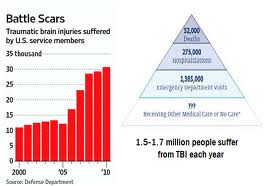
 What is the real reason traumatic brain injury is misdiagnosed, untreated or under treated? Do we have enough rehabilitation centers in America to accommodate 1.7 million people every year? Is this a national problem or local issue? I cannot believe they missed the most obvious of all … brain injury. I was the patient with all the issues…but the healthcare professionals still expect you have it all together to let them know what’s going on. What one does know is most head injuries, strokes, and many diseases of the brain are not classic in any way. The emergency room personnel look for only the classic obvious symptoms: one sided weakness, dropping of the facial muscles, slurred speech, and others. These are not necessarily symptoms that appear with the 1.7 million traumatic brain injuries every year. Read the rest of this entry »
Tags: Concussion, Head Injury, Health care provider, Traumatic Brain Injury
How can you cope with the unmentionable after traumatic brain injury? It’s blood, sweat and tears with urine, sweat and feces. Oh Crap, or Piss-on-it, or just too much Sweat! Any way you look at it I stink!  The injury is healed, but now you have so many symptoms to live and cope with. Now, who is there to help you anyway? You are at home…big deal! It is a big deal to be at home, but now you have to figure out your surroundings, your role in life, but most importantly how your body now functions or for that matter does not function. Read the rest of this entry »
Tags: Brain Injury, Injury, Rehabilitation, Trauma and Injuries, Traumatic Brain Injury
How often do you heard you are not the same person? In many ways you have changed but the struggle you deal with is partly owing to all the characteristics who made you what you are today. You are still the same person, in the literal sense. And so much of you can not change. You just function differently physically, emotionally and in life itself. It’s this struggle within that is so difficult. I tried to put into encouraging words the easiest way to understand why you are NOT a different person and why you struggle with this every day. Read the rest of this entry »
Tags: broken brain, Conditions and Diseases, emotional, encouragement, heart mind and soul, living with brain injury, severe brain injury, strength hope, support, Traumatic Brain Injury
 Are you searching out affordable, consistent, reliable family therapy to restore life after traumatic brain injury or chronic illness? Do you feel as though no one is listening? No one cares or understands? Where is that unconditional love?
 What is the best therapy that works, stands by you through thick and thin, and does not pass judgment? When you and the family feel things have stabilized after your injury or illness it may be time to consider something you have not considered before injury. Read the rest of this entry »
Tags: Brain Injury, Chronic (medicine), Health, Illness, Neurological disorder, Parkinsons disease, Traumatic Brain Injury
How was I going to get through the holidays with this new worsening of symptoms from traumatic brain injury? I could not tolerate noise, lights, conversations, and just the simple things in daily life. By the middle of December my headaches were getting worse, if that were even possible! My vision was darkening. Read the rest of this entry »
Tags: Assaults on Nurse and Healthcare Providers, Conditions and Diseases, Head Injury, Headache, Neurological Disorders, Nursing, Traumatic Brain Injury
I was sure this nightmare with head injury was nearing the end. I guess my expectations were unrealistic. Being well-educated in the field of brain injury and rehabilitation did not prepare me for all that was to come in December 1991. I thought I was better shortly after brain injury but it got worse. Read the rest of this entry »
Tags: Assaults on Nurse and Healthcare Providers, Brain Injury, Closed Head Injury, Disability, Health, Injury, Neurological disorder, Neurology, Nurses and Workplace Violence, Physical medicine and rehabilitation, Safety, Trauma and Injuries, Traumatic Brain Injury, Worker's Compensation
My computer is not working like it did before brain injury. I need a computer to help me compensate for my memory and other things. What should I do and where can I go? Read the rest of this entry »
Tags: American Veterans, Apple, Brain Injury, Conditions and Diseases, Disabled American Veterans, Head Injury, Health, Neurorehabilitation, Physical medicine and rehabilitation, Rehabilitation, Trauma and Injuries, Traumatic Brain Injury

If you look okay you are expected to be working!
It was time to get back to work following a closed head injury. I thought everything was going well and my simple concussion was resolved. Oh, if I only knew what was yet to come. So by Monday November 4, 1991 and 5 days later I was ready to return to work. After all a few days have passed since I was hit in the head and certainly there should not be any reason to keep me from working. Read the rest of this entry »
Tags: American Nurses, Assault, Assaults on Nurse and Healthcare Providers, Brain, Brain Injury, Closed Head Injury, Conditions and Diseases, Disabled American Veterans, Head Injury, Health, Nursing, Physical medicine and rehabilitation, Police, Registered nurse, Safety, Trauma and Injuries, Traumatic Brain Injury
10 tips and highlights to handle telephone calls without distraction and keep focused for those with brain injuries, brain dysfunction, and other chronic illnesses.

So many types of telephones.
Everyone is familiar with the telephone for communication at work, at home or more commonly everywhere one goes with their cell phone. Read the rest of this entry »
Tags: Acquired brain injury, Brain, Brain Injury, Conditions and Diseases, Disabled American Veterans, Exercise, Head Injury, Health, Neurological disorder, Physical medicine and rehabilitation, Trauma and Injuries, Traumatic Brain Injury

Feeling puzzled? common symptom after brain injury.

Frequently x-rays and other diagnostic tools are "Normal". Need healthcare professionals to monitor symptoms and clues to changing status.
I did not think I could go deeper into the twilight zone and neither did I think I had a brain injury. After all, I had many injuries prior to this assault and recovered from every single one without residual effects. What was I thinking as a nurse? Read the rest of this entry »
Tags: American Nurses, Assault, Assaults on Nurse and Healthcare Providers, Brain Injury, Conditions and Diseases, Disabled American Veterans, Head Injury, Health, Medical Specialties, Neurological disorder, Nurse Violence, Physical medicine and rehabilitation, Safety, Trauma and Injuries, Traumatic Brain Injury
Are you having difficulty standing? Is your balance off and you fall often? Are you dizzy? Or are you simply too tired or fatigue? Do your joints ache? Do you think you have had a traumatic brain injury but not sure? Have you been diagnosed with a brain injury or medical condition? Are you a hero that has fought for our country? Are you a disabled American Veteran?

Children in aquatic therapy
Exercise is always important, but now it can be fun! Read the rest of this entry »
Tags: aquatic exercise, Brain, Brain Injury, Conditions and Diseases, Disabled American Veterans, Exercise, Head Injury, Health, Neurological disorder, Nurse, Physical exercise, Physical medicine and rehabilitation, Physician, Safety, Trauma and Injuries, Traumatic Brain Injury

CAUSES OF TRAUMATIC BRAIN INJURY
Learning what brain injury is all about. It was nothing like I experienced as a nurse treating the patients with brain injury. Little did I know I was about to enter the twilight zone at work on October 30, 1991. Read the rest of this entry »
Tags: Assaults on Nurse and Healthcare Providers, Disabled American Veterans, Exercise, Head Injury, Health, Neurological disorder, Nurse, Nursing and violence, Parkinsons disease, Patient, Physical medicine and rehabilitation, Physical therapy, Safety, Trauma and Injuries, Traumatic Brain Injury
Forgetting or simply not remembering? Which is it? Well, forgetting is something you have in your memory. Or maybe it is not that simple. It could be something you tried to memorize but could not, then you forgot what it was. It’s all a matter of intrepretion. Remembering is questionable. Was it ever in your memory to begin with, or was it something you tried to remember and could not have. The question is more complex then anyone could believe…until you’ve been there. Read the rest of this entry »
Tags: Acquired brain injury, Brain, Brain Injury, Conditions and Diseases, Disabled American Veterans, Exercise, Forgetting, Head Injury, Health, Memory, Neurological disorder, Nurse, Physical medicine and rehabilitation, Physician, Trauma and Injuries, Traumatic Brain Injury

Image via Wikipedia


Image via Wikipedia
Nurses work with violent patients every day. Their safety is compromised by combative patient’s and families. Safety is always a priority for patients, but rarely is safety acknowledged for the nurses themselves. Or at least it does not appear that way behind closed doors. They are exceedingly exposed to abuse within the healthcare system, but yet expected to accept it. This is true for all our of healthcare professionals and caregivers. Read the rest of this entry »
Tags: American Nurses, Assaults on Nurse and Healthcare Providers, Brain Injury, Disabled American Veterans, Head Injury, Health, Health care, Nurse, Nursing, Nursing Violence, Patient, Physical medicine and rehabilitation, Prevent Violence on Nurses, Safety, Traumatic Brain Injury










 braininjuryselfrehabilitation